
A Place in History · Barcelona
A street with a long memory.
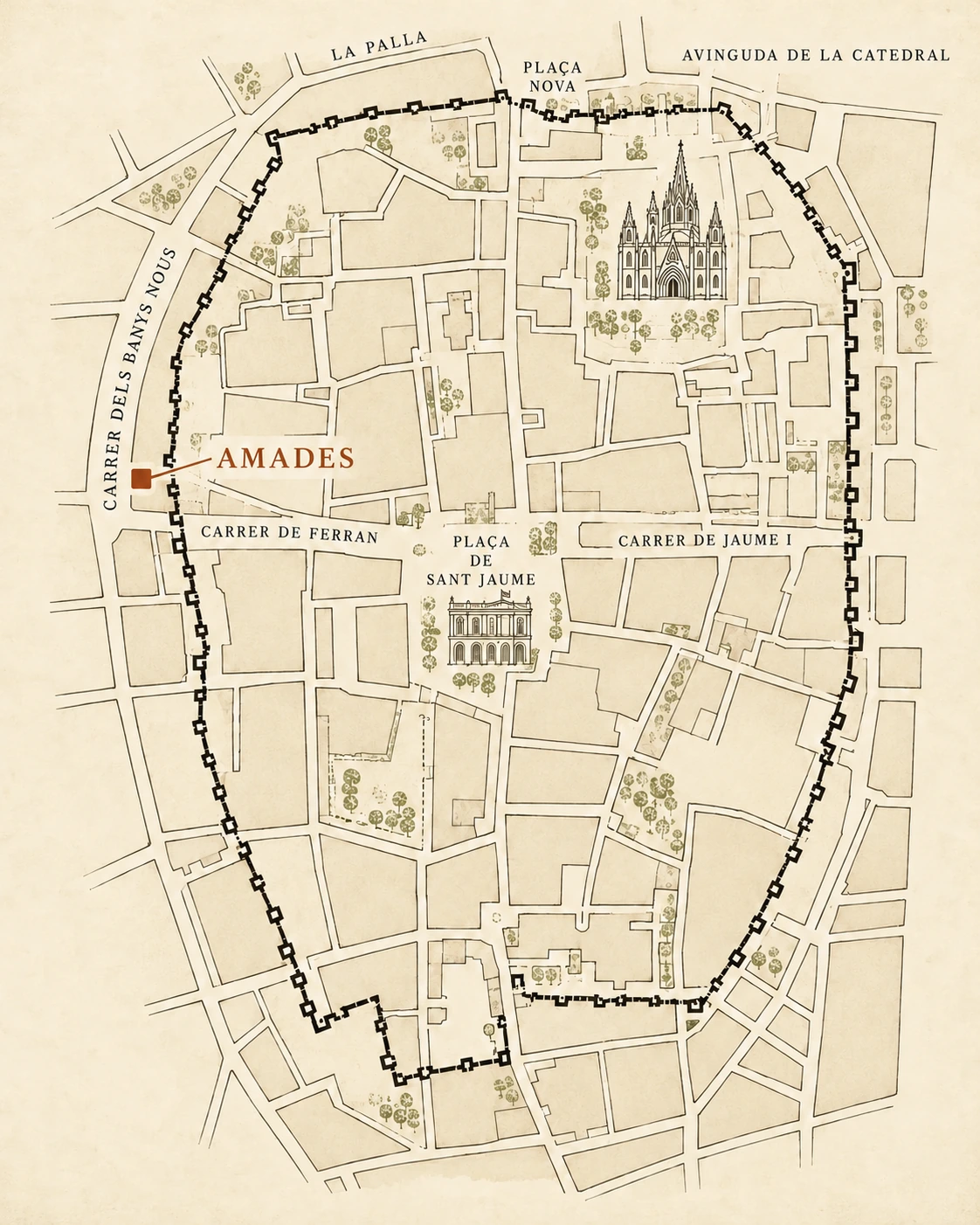
In the heart of Barcelona’s Gothic Quarter, just beyond the walls of ancient Barcino, history is part of everyday life. It’s here, on Carrer dels Banys Nous, that AMADES has found its home.
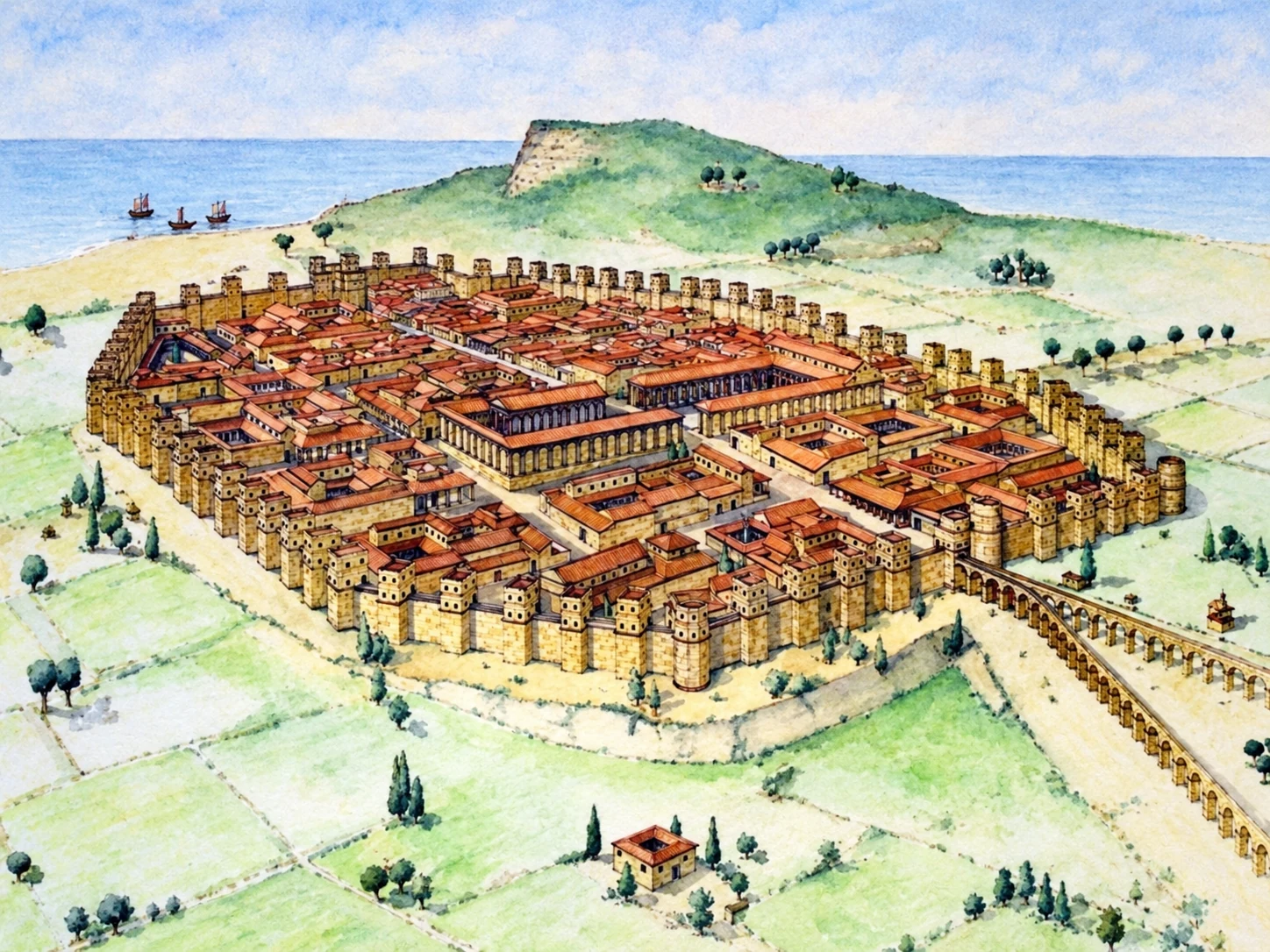
Barcino
Before these streets had names.
Almost two thousand years ago, this part of Barcelona stood at the edge of Barcino, the small Roman town from which the city would grow.
Surrounded by defensive walls, Barcino was very different from the Barcelona we know today. As the centuries passed, the city expanded beyond its original boundaries, and new streets and buildings gradually took shape around the old walls.
Carrer dels Banys Nous follows part of that ancient boundary. Even today, walking along the street means following the outer edge of what was once Roman Barcelona.
Carrer dels Banys Nous
A street with a story.
The street where AMADES is located has a history that goes back many centuries, and its name tells part of that story.
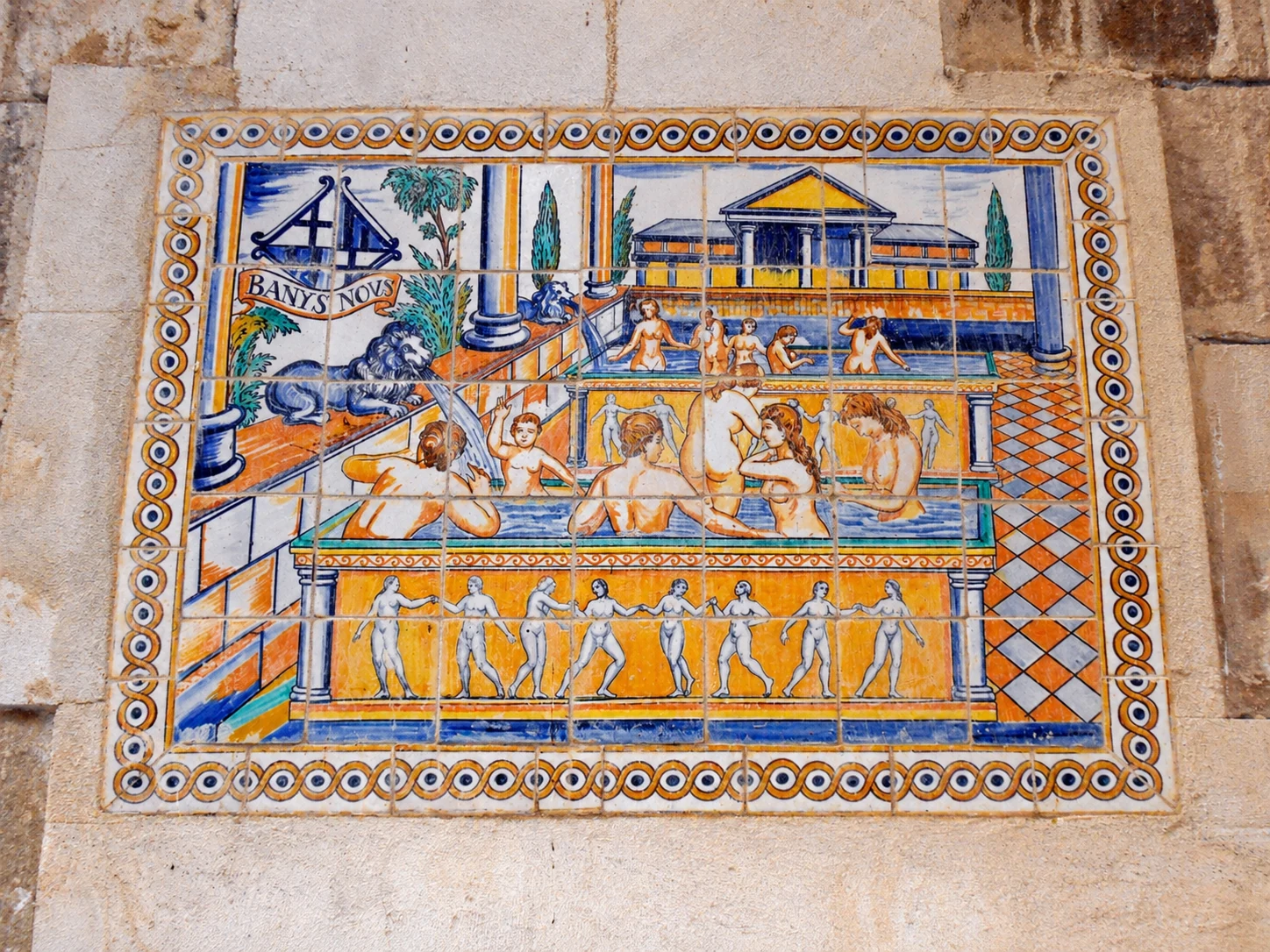
In 1160, Count Ramon Berenguer IV and Abraham Bonastruc, a member of Barcelona’s Jewish community, agreed to establish public baths on land just outside the old Roman walls, near what is now the corner of Carrer dels Banys Nous and Carrer de la Boqueria.
The baths were built in the tradition of Arab bathhouses, using Romanesque building techniques. They included a mikveh, a ritual bath associated with Jewish religious life. They were sometimes known as the Arab baths, although their foundation was closely connected with Barcelona’s Jewish community.
The surrounding neighbourhood continued to evolve through medieval times. Nearby was El Call, Barcelona’s historic Jewish quarter, while new homes and streets gradually transformed the area around the Roman walls.
The original baths eventually disappeared, but their name remains. Banys Nous means New Baths in Catalan, a reminder of the people and everyday life that shaped this part of Barcelona.
Through the centuries
A little history, at a glance.
Late 1st century BC
Roman Barcino is founded.
3rd–4th centuries AD
The city’s Roman walls are rebuilt and strengthened.
1160
Ramon Berenguer IV and Abraham Bonastruc agree to establish the public baths that give Carrer dels Banys Nous its name.
13th century
The area around the Roman walls develops further as medieval Barcelona expands.
Today
AMADES brings new life to a building on one of the old city’s historic streets.
Joan Amades (1890–1959)
The name we carry.
Our name pays tribute to Joan Amades (1890–1959), the Catalan folklorist who dedicated his life to collecting and preserving the customs, stories and traditions of Catalonia.
His work celebrated the everyday culture of a place: its people, its celebrations and the traditions passed from one generation to another.
That appreciation for local culture and the small rituals of everyday life feels particularly at home here.
AMADES · Banys Nous, 8
A home with character.
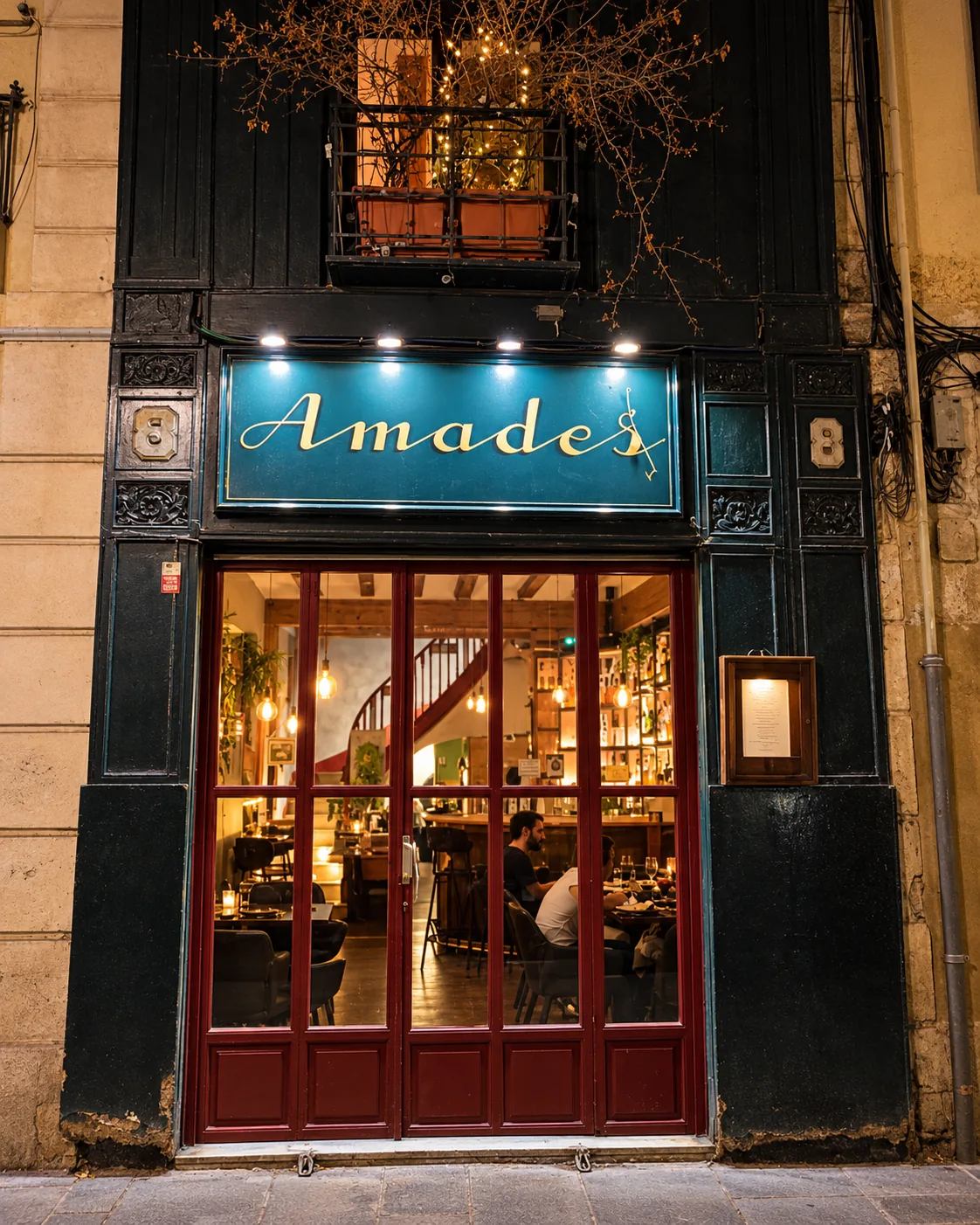
Today, AMADES occupies number 8 on this same historic street.
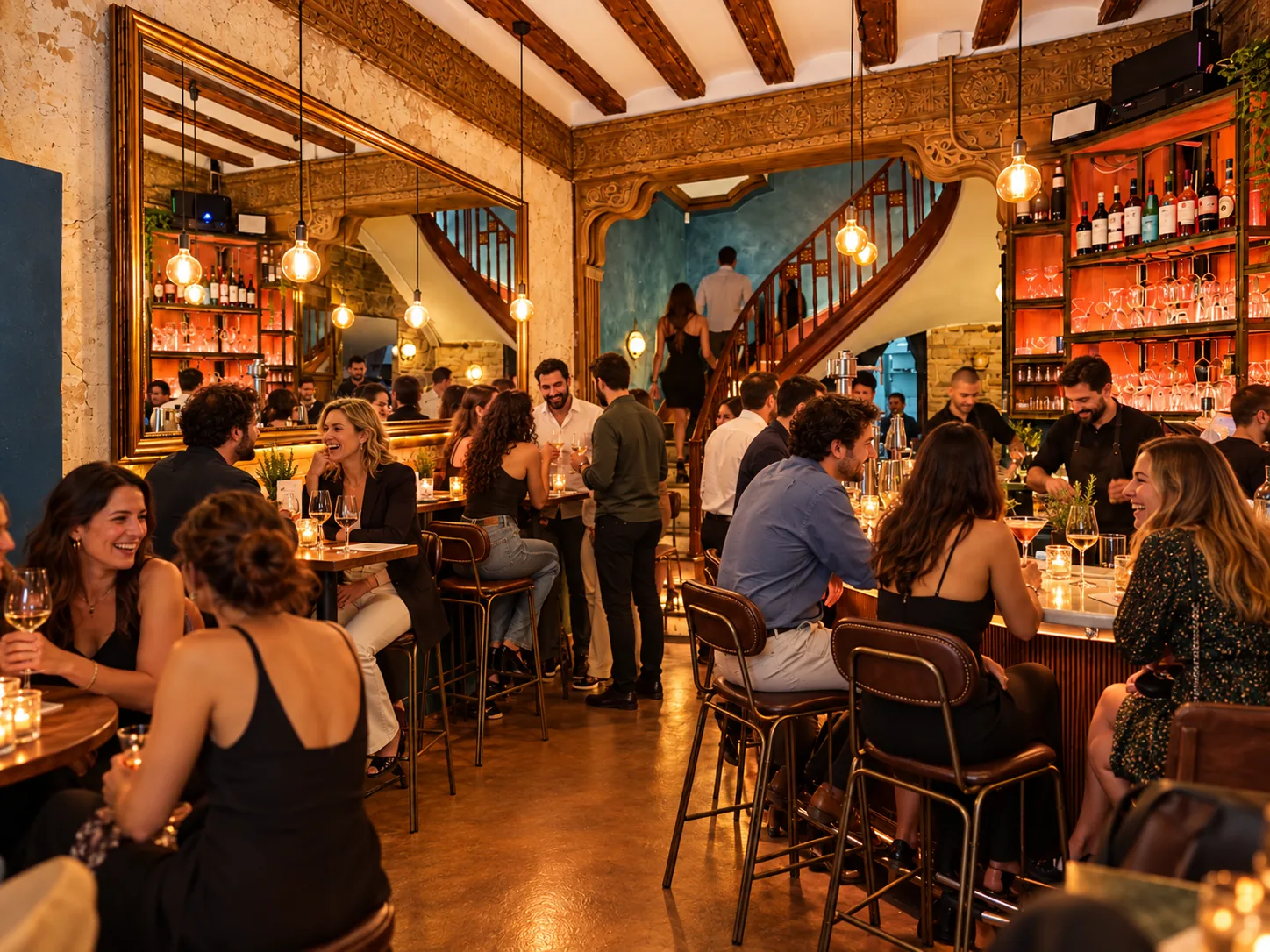
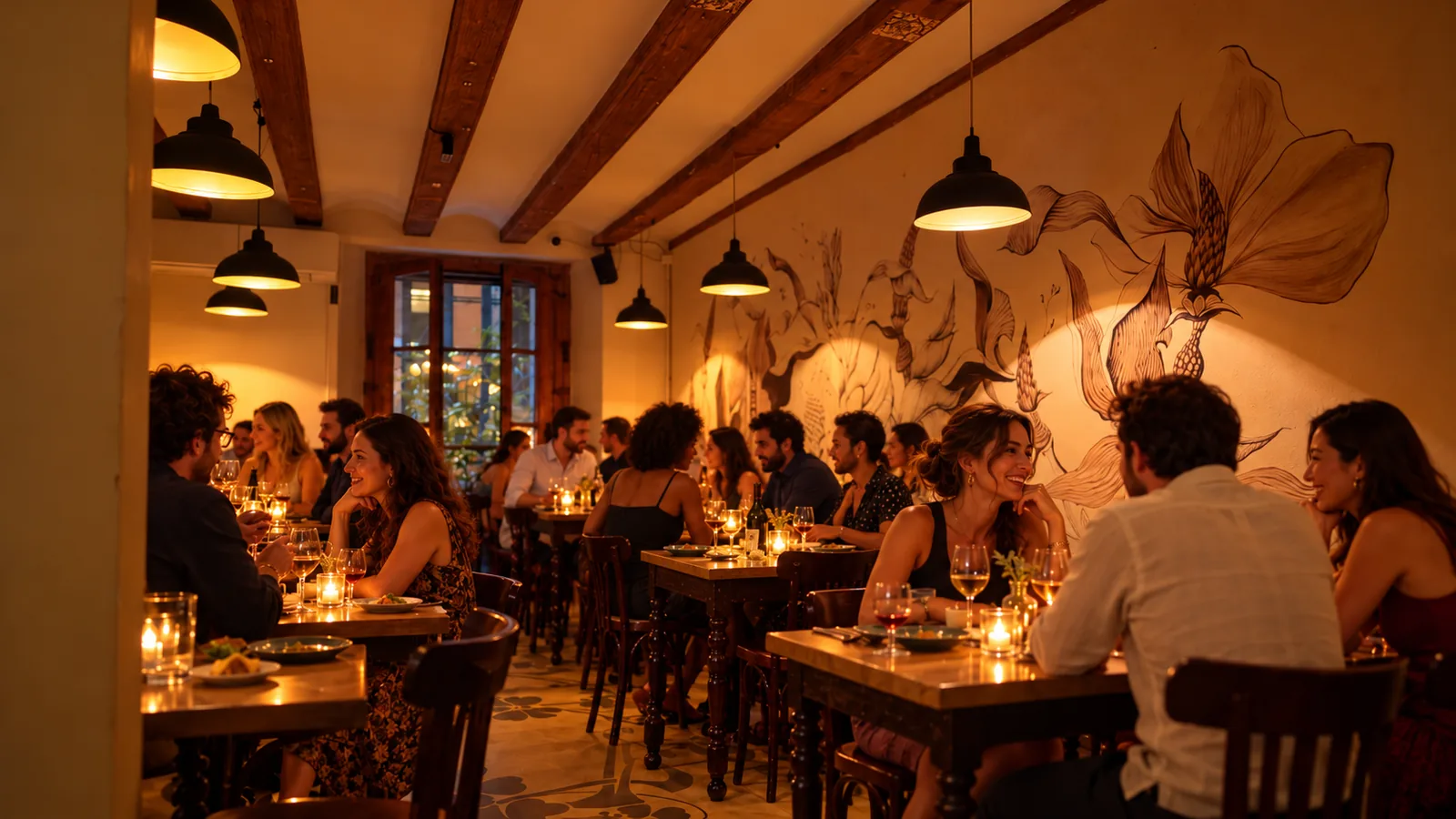
Inside, much of the building’s character comes from the features that have been preserved over time: exposed stone walls, wooden beams, worn textures and the distinctive curved staircase leading to the main dining room upstairs.
We wanted to preserve and showcase as much of the old building as possible, allowing its existing features to remain part of the restaurant. These details give each space its own personality and connect AMADES to the older Barcelona outside its doors.
The building has a new life today, filled with food, conversation and people coming together. For us, respecting its past is part of what makes AMADES what it is.
Our philosophy
Rooted in Barcelona. Open to the world.
Our connection to Barcelona goes beyond the building itself. Catalan and Spanish culinary traditions are an important part of our kitchen, alongside flavours, ingredients and ideas from other cultures.
We believe good food brings people together, and that a restaurant is as much about the people and conversations around the table as it is about what’s on the plate.
At AMADES, the past and present are part of the same story: a respect for where we come from, combined with our own way of doing things today.